Recent Posts
Introduction
A familiar pattern is playing out across B2B companies, agencies, and growing businesses. Content output is up. Ad budgets are increasing. Dashboards show impressions climbing. Yet revenue pipelines feel weaker, sales teams complain about poor-quality leads, and conversions are becoming harder to predict.
This disconnect is not accidental.
Social media lead generation in 2026 no longer behaves the way it did even a year ago. The rules that once drove predictable growth have quietly collapsed, replaced by a far more complex system driven by AI, behavior signals, and trust accumulation.
Most businesses are still operating with outdated assumptions. They are optimizing for clicks, reach, and surface-level engagement while platforms now prioritize retention, relevance, and depth. The result is a widening gap between effort and outcome.
This article breaks down why social media lead generation is failing today, what fundamentally changed, and what high-performing companies are doing differently to rebuild scalable, conversion-driven systems.
The Current Landscape (2024 to 2026 Reality Shift)
The biggest misconception in modern marketing is that scaling activity will scale results. That assumption no longer holds.
The Collapse of Predictable Growth Models
Organic reach has become increasingly constrained. Posting more content does not guarantee visibility. Paid media has also lost its predictability. Rising costs and declining targeting precision have made outcomes harder to control.
Platforms like LinkedIn, Meta, TikTok, and X have shifted toward AI-driven content distribution. Instead of showing content based on who follows you, they prioritize what keeps users engaged.
This means your content is now competing against everything, not just your direct competitors.
Platform Evolution and Algorithm Shifts
Across major platforms, a few consistent patterns have emerged:
- Content is ranked based on depth, not just engagement
- Native formats outperform outbound links
- Creator-style content is favored over brand messaging
- Retention signals such as watch time and saves matter more than clicks
For example, LinkedIn now heavily prioritizes dwell time, comment quality, and topical relevance. Meta increasingly rewards in-platform interactions over external traffic.
Why Traditional Strategies Are Breaking
Old strategies were built on:
- Stable audience targeting
- Linear funnels
- Direct attribution
- Predictable organic reach
In 2026, all of these are unstable.
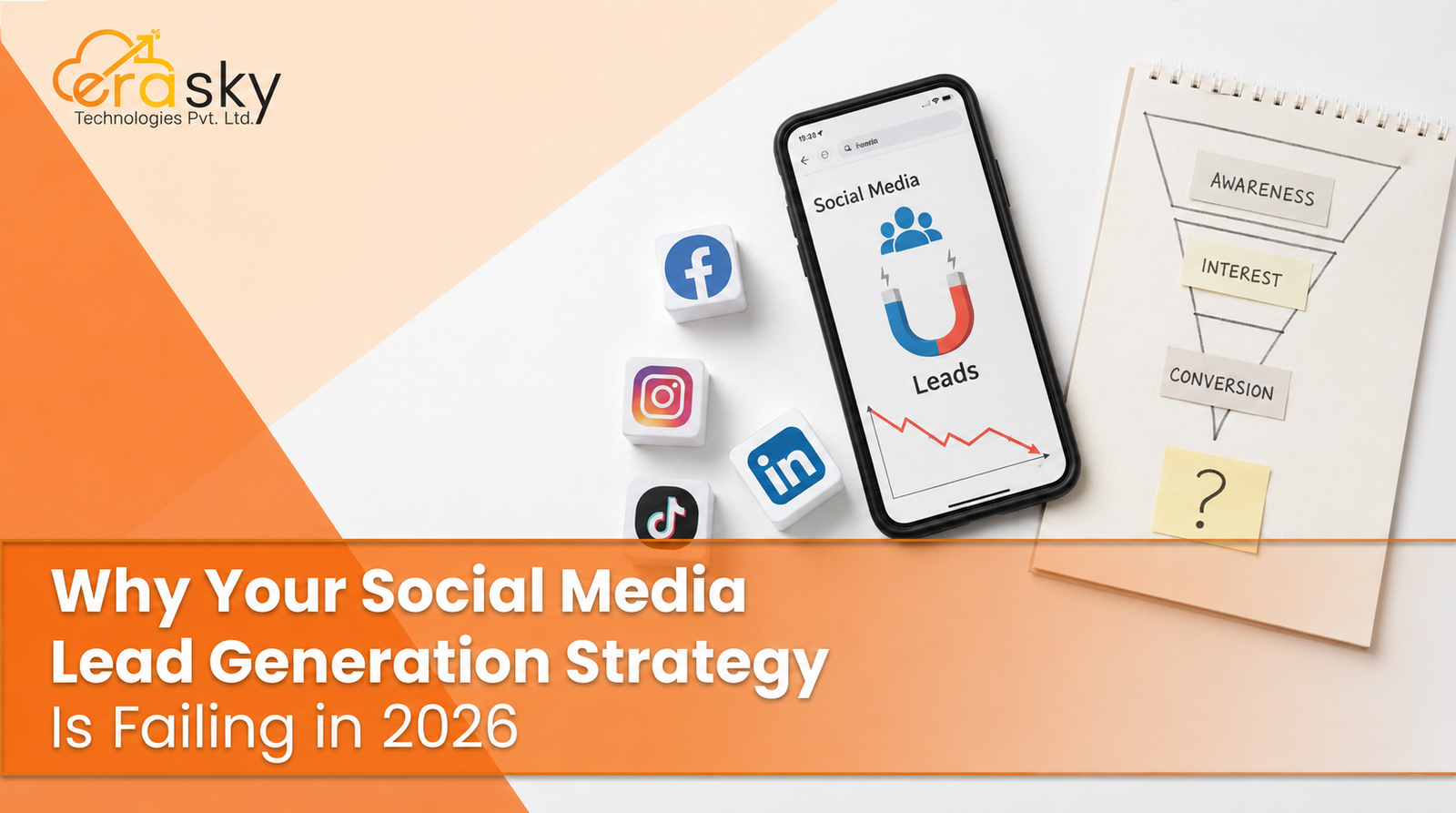
A typical lead generation funnel that relies on pushing users from a post to a landing page now faces friction at every step. Algorithms reduce distribution for outbound links. Users hesitate to click. Trust is not established in a single interaction.
The system itself has changed.
Core Problem Breakdown
The failure of modern content marketing lead gen strategies is not due to one issue. It is a combination of structural, behavioral, and strategic gaps.
Misalignment Between Platforms and Business Goals
Platforms optimize for attention and retention. Businesses optimize for revenue and qualified leads.
This creates a mismatch. A campaign that performs well in platform metrics may still fail commercially.
Content Commoditization Driven by AI
AI has dramatically increased content production. The downside is that most content now looks and sounds the same.
Buyers quickly recognize templated messaging. Trust declines. Engagement quality drops. Cost per acquisition rises.
The more generic the content, the less it converts.
Broken Funnel Architecture
The traditional funnel assumed a direct path:
Social post → Click → Landing page → Lead
Today, buying journeys are nonlinear. A prospect might see multiple posts, watch a video, read comments, and only convert weeks later through a different channel.
This makes most lead generation funnel designs incomplete.
Psychological Shift in Buyers
Modern buyers are more informed and more skeptical. They do not respond well to aggressive calls to action or generic lead magnets.
They trust individuals more than brands. They engage with content that demonstrates expertise rather than content that tries to sell.
Platform Dependency
Many businesses rely entirely on rented audiences. When algorithms change, their reach disappears. Without first-party data, they lose control over growth.
Key Factors Affecting Performance
Understanding what drives results today requires looking at multiple interconnected variables.
Content Depth and Authority
Surface-level posts no longer perform consistently. Platforms reward content that keeps users engaged longer.
Deep, insightful content signals expertise. This improves distribution and builds trust.
Creative Quality Over Targeting
Targeting is no longer the primary advantage in paid campaigns. Creative has taken its place.
Strong messaging attracts the right audience even with broad targeting. Weak creative fails regardless of targeting precision.
This is a major shift in how social media campaign examples should be evaluated.
Trust Accumulation
Conversions rarely happen on first touch. Buyers need repeated exposure to build familiarity.
Consistent, value-driven content creates trust over time. Without it, lead quality suffers.
Funnel Friction
High-friction offers such as generic ebooks underperform. Users are less willing to exchange information without clear value.
Micro-conversions such as engagement, saves, or DM interactions are becoming more important.
Platform-Native Behavior
Content that keeps users within the platform performs better. External links often reduce reach.
Native video, carousels, and in-platform forms align better with algorithmic preferences.
Data Ownership and CRM Integration
First-party data is becoming a key differentiator. Businesses that capture and use data effectively can build stronger relationships and improve conversion rates.
Attribution Complexity
Attribution is increasingly fragmented. Users interact across multiple platforms and devices.
Many conversions appear as direct traffic or are misattributed. This leads to poor decision-making.
Strategic Fixes and Frameworks
Fixing social media lead generation requires more than small adjustments. It requires rebuilding the system.
Rebuild the Funnel Structure
Replace linear funnels with layered systems:
- Awareness through content and discovery
- Trust through education and consistency
- Conversion through value-driven offers
- Retention through owned channels
This reflects how buyers actually behave.
Shift to Creator-Led Content
People trust people more than brands. Founder-led and employee-driven content performs better than corporate messaging.
This is especially relevant for any social media marketing agency for small business trying to stand out in crowded markets.
Replace Generic Lead Magnets
Traditional lead magnets often fail because they lack differentiation.
Instead, focus on:
- Consultations
- Workshops
- Audits
- Community access
These offer immediate and tangible value.
Adopt Native Content Strategy
Create content that fits each platform:
- Short-form video
- Educational posts
- Interactive formats
Avoid forcing users to leave the platform too early.
Build First-Party Data Systems
Capture emails, segment audiences, and track behavior. This reduces dependence on algorithms and improves long-term performance.
Optimize for Trust, Not Clicks
High click-through rates do not guarantee conversions. Focus on engagement quality and relationship building.
Systems Thinking (Ecosystem View)
One of the biggest mistakes businesses make is trying to fix isolated parts of their strategy.
Better ads will not fix a weak offer. More content will not fix a lack of trust. Lower cost per lead will not fix poor lead quality.
The Connected System
Effective content marketing lead gen operates as a system:
Content drives attention.
Attention builds trust.
Trust enables conversion.
Conversion feeds data.
Data improves future targeting.
Each component influences the others.
Why Integration Matters
Fragmented strategies lead to inconsistent results. Aligning content, ads, CRM, and funnel design creates compounding effects.
This level of coordination is difficult to execute internally without clear systems and expertise.
That is where structured partners like Era Sky Technologies quietly stand out. Instead of focusing on isolated tactics, they approach social media lead generation as an interconnected growth system, aligning strategy, execution, and data into one cohesive framework.
Data, Benchmarks, and Performance Metrics
Understanding performance requires looking beyond surface metrics.
Current Benchmarks
- Organic reach is declining across most platforms
- Cost per lead is rising in competitive industries
- Conversion cycles are longer
These trends are consistent across many social media campaign examples in B2B environments.
Metrics That Actually Matter
- Cost per qualified lead
- Lead-to-opportunity ratio
- Pipeline contribution
- Engagement depth
Vanity metrics like impressions or likes offer limited insight.
Self-Diagnosis
- High leads but low revenue indicates poor quality
- High reach but low engagement indicates weak content
- Strong engagement but low conversions indicates funnel issues
This diagnostic approach helps identify where the system is breaking.
Emerging Trends and Future Direction
The landscape will continue to evolve. Staying ahead requires adapting to key trends.
AI-Enhanced Personalization
AI is moving beyond automation into personalization. Campaigns that adapt to user behavior outperform static strategies.
Employee-Generated Content
Employees often generate more authentic engagement than brand accounts. This trend is gaining momentum.
Searchable Social Content
Social platforms are increasingly functioning like search engines. Optimizing content for discoverability is becoming essential.
Community-Led Growth
Private communities are becoming powerful conversion channels. They provide deeper engagement and stronger trust.
Predictive Algorithms
Platforms are getting better at identifying intent before users explicitly express it. This changes how targeting works.
Interesting Insights and Lesser-Known Facts
- Most B2B buyers interact with content multiple times before converting
- Native content often achieves significantly higher reach than link-based posts
- Lower cost per lead does not always translate into higher revenue
- Dark social channels play a major role in conversions but are often invisible in analytics
- Creator-led content consistently outperforms brand-led messaging
- Ad fatigue cycles have shortened significantly, requiring faster iteration
Final Analysis
The failure of social media lead generation in 2026 is not due to a single issue. It is the result of multiple interconnected changes:
- Platform algorithms
- Buyer behavior
- Content saturation
- Attribution challenges
- Funnel design limitations
Businesses that continue to treat social media as a simple traffic channel will struggle.
Those that succeed understand that social media is now:
- A media channel
- A trust-building system
- A data engine
- A long-term growth asset
The difference lies in how these elements are structured and executed.
Conclusion
The reality is straightforward. Effort alone is no longer enough. More content, more ads, and more campaigns will not fix a broken system.
What matters is alignment. Strategy must match how platforms operate and how buyers behave today.
Businesses that build structured, integrated systems are seeing stronger pipelines, better lead quality, and more predictable growth.
This is where the gap becomes clear. Most companies understand what needs to change, but executing it across content, funnels, ads, and data is complex.
Era Sky Technologies addresses this complexity by bringing these moving parts together into a unified system. Their approach focuses on building sustainable, trust-driven lead generation ecosystems rather than chasing short-term metrics.
If your current lead generation funnel is underperforming, the next step is not to push harder. It is to evaluate what is misaligned, fix it at the system level, and rebuild with clarity.
Audit your current strategy. Identify the gaps. Then move toward a model that is built for how social media actually works today.
FAQs
Why is my social media lead generation not working anymore?
Because platforms now prioritize engagement depth, trust, and retention rather than clicks and traffic. Traditional funnels are no longer aligned with these systems.
What is the biggest mistake in a lead generation funnel today?
Relying on a linear path and expecting immediate conversions without building trust through multiple touchpoints.
How can I improve content marketing lead gen performance?
Focus on creating high-value, authority-driven content and align it with a multi-stage funnel that builds trust over time.
Are paid ads still effective for social media lead generation?
Yes, but they require strong creative, better messaging, and integration with a broader strategy to deliver results.
What role do social media campaign examples play in strategy?
They provide insight into what works, but copying them without adapting to your audience and system will not deliver consistent results.
Should I hire a social media marketing agency for small business growth?
If your internal systems lack alignment across content, ads, and data, working with a structured agency can help build a scalable and integrated approach.