Recent Posts
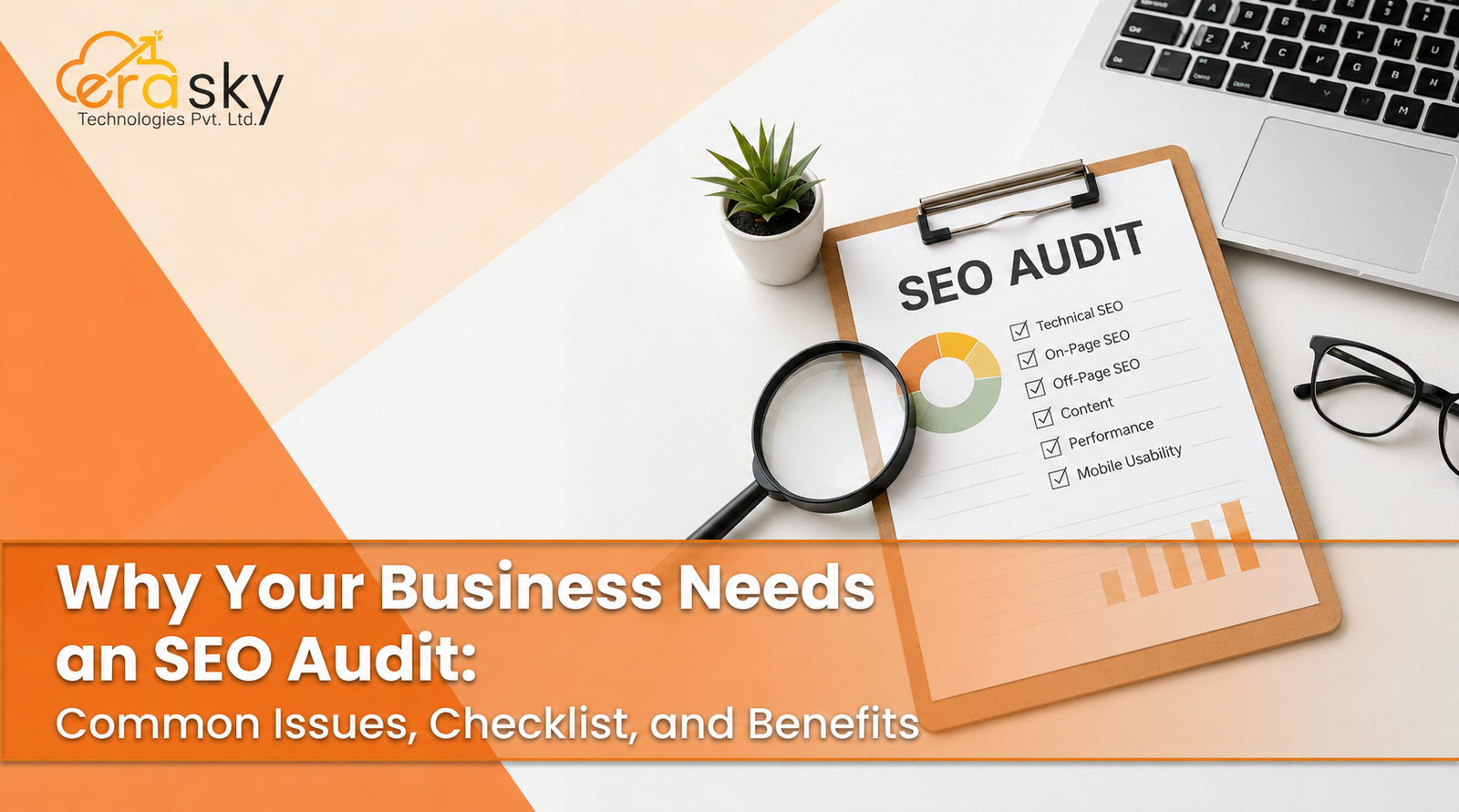
Your website can look polished and still quietly lose traffic, leads, and revenue.
The homepage may load. The service pages may exist. Your blog may be active. But rankings keep shifting, organic enquiries slow down, and competitors appear where your business should be visible. For many founders and marketers, the first instinct is to publish more content or chase more backlinks. Sometimes that helps. Often, it does not fix the real problem.
The real issue may be technical. Search engines may not be crawling your most valuable pages. Key service pages may be excluded from the index. Mobile users may be leaving because the site is slow. Your content may rank for the wrong intent. Your analytics may not show where leads are actually coming from.
That is why a modern SEO audit checklist matters.
An SEO audit is not just a ranking report. In 2026, it is a business visibility and revenue health check. It shows whether your website can be crawled, indexed, understood, trusted, ranked, clicked, and converted.
Why SEO Audits Matter More Now
SEO has changed significantly from 2024 to 2026. Search is more competitive, more mobile-led, more AI-influenced, and more quality-sensitive. Old audit methods that only check title tags, keywords, and backlinks are no longer enough.
AI Overviews and zero-click search have changed how users interact with Google. A business may rank and still lose clicks because answers, ads, local packs, snippets, and AI summaries take attention before users ever reach a website. This means an audit must look beyond positions and measure full search visibility.
Core Web Vitals have also evolved. Interaction to Next Paint replaced First Input Delay as a Core Web Vital in 2024. Today, businesses need to watch loading speed, responsiveness, and visual stability. A slow or unstable site does not only hurt SEO. It hurts trust, form submissions, sales, and user confidence.
Mobile-first indexing also makes mobile experience critical. Google primarily uses the mobile version of a site for indexing and ranking. If your desktop site has strong content but your mobile site hides sections, loads slowly, or makes forms difficult, organic performance can suffer.
Search quality standards are stricter too. Thin pages, copied content, low-value AI-generated content, weak trust signals, and poor user experience are harder to ignore. A proper audit helps identify these risks before they damage visibility.
This is why businesses now need deeper SEO audit services that connect technical health, content quality, website speed, AI search readiness, and conversions.
Common SEO Issues That Hurt Business Growth
Most SEO problems are not isolated. They are usually connected to deeper website and strategy gaps.
1. Crawlability Issues
Crawlability means search engines can discover and access your pages. If bots cannot reach important pages, those pages cannot perform properly. Common crawlability issues include blocked pages in robots.txt, orphan pages, broken links, JavaScript-only links, redirect chains, poor XML sitemaps, and important pages buried too deep in the site. The business impact is serious. Your highest-value service, product, or location pages may not be discovered efficiently. Search engines may waste time crawling low-value URLs while revenue pages remain weak.
2. Indexing Problems
A page can be crawlable but still not appear in search results. Indexing problems often come from noindex tags, incorrect canonical tags, duplicate URLs, soft 404s, weak content, or conflicting technical signals. For a business, this can mean that important landing pages exist on the website but remain invisible in search. That is why indexability must be checked before investing heavily in new content.
3. Poor Website Performance
Speed is not only a technical metric. It affects buyer behavior. A strong website performance audit checks mobile load speed, server response time, image size, JavaScript weight, third-party scripts, layout shifts, and form responsiveness. If a service page loads slowly or a checkout page feels clunky, users leave. Every visitor lost because of poor performance is wasted traffic.
4. Weak Mobile Experience
Many business owners review their website on desktop, but customers often browse on mobile. Mobile issues include hidden content, poor navigation, slow loading, intrusive popups, hard-to-tap buttons, and long forms. Since mobile-first indexing is now standard, mobile problems can affect both rankings and conversions.
5. Content That Does Not Match Search Intent
Content can be optimized and still fail if it does not match what users want. A blog post may target a keyword that needs a service page. A service page may be too thin to rank. A product page may lack reviews, FAQs, specifications, or comparison points. A guide may attract traffic but provide no path toward enquiry. Good SEO content answers the user’s real question, builds trust, and guides the next step.
6. Weak Internal Linking
Many websites publish useful content but fail to connect it to commercial pages. Blog posts attract readers, but those readers never reach service pages, case studies, product pages, or contact forms. Internal linking helps search engines understand page relationships. It also helps users move from learning to action.
7. Poor Measurement
If SEO is measured only by traffic and rankings, the business misses the bigger picture. An audit should review organic leads, calls, quote requests, demo bookings, ecommerce revenue, assisted conversions, landing page conversion rates, and branded versus non-branded performance. Traffic is useful only when it supports business outcomes.
Key Factors That Shape SEO Performance
A strong audit reviews the full system. Crawlability determines whether search engines can access your pages. Indexability determines whether those pages can appear in search. Site architecture shows whether users and bots can find important pages easily. Internal links distribute authority and connect content to revenue pages.
Core Web Vitals measure how fast, stable, and responsive the website feels. Mobile experience affects both indexing and user behavior. Content quality determines whether the page satisfies search intent. Trust signals show whether users should believe your business. Structured data helps search engines understand your pages. Backlinks and brand mentions strengthen authority. Analytics show whether SEO is driving real business value. This is why isolated fixes often fail. More blogs will not help if service pages are noindexed. Faster pages will not convert if the message is weak. Better metadata will not solve poor architecture. Backlinks will not perform well if authority never flows to commercial pages.
SEO works as an ecosystem.
A Practical SEO Audit Framework
The best audits do not simply list errors. They prioritize fixes based on business impact.
Step 1: Fix Visibility Blockers First
Start with the issues that stop pages from being crawled or indexed. These include noindex mistakes, robots.txt blocks, broken canonical tags, redirect chains, sitemap errors, orphan pages, and server errors. This is where technical SEO services matter most. A business may know traffic is falling, but technical investigation reveals whether search engines can actually access and understand the right pages.
Step 2: Improve Website Speed and Mobile UX
Next, fix performance problems on high-value pages. Compress large images, reduce unnecessary JavaScript, improve hosting, remove nonessential scripts, stabilize layouts, and make mobile forms easier to complete. The goal is not just a better score. The goal is a smoother path from search result to conversion.
Step 3: Strengthen Architecture and Internal Links
Important pages should be easy to find. Service pages, product categories, location pages, and conversion pages should not sit buried deep inside the site. Build links from blogs to service pages, from service pages to case studies, from guides to conversion pages, and from category pages to relevant products.
Step 4: Improve Content Quality
Review thin, outdated, duplicate, or poorly targeted content. Strengthen pages with clearer explanations, FAQs, proof, examples, testimonials, updated details, and stronger calls-to-action.
Content should not just attract visitors. It should reduce doubt and support decisions.
Step 5: Add AI Search and Structured Data Readiness
AI search rewards clarity, structure, authority, and extractable answers. Use clear headings, direct answers, organization information, schema, author credibility, and strong topical coverage.
This helps both traditional search and newer AI-led search experiences understand your business.
Step 6: Connect SEO to Revenue
Finally, make sure tracking is accurate. Set up conversion events, call tracking, form tracking, ecommerce revenue, landing page reporting, and assisted conversion analysis.
This turns SEO from a marketing expense into a measurable growth channel.
Why Era Sky Technologies Fits This Need
Many businesses do not struggle because they lack tools. They struggle because they lack clarity. Automated SEO tools can produce long lists of errors, but they do not always explain which problems affect revenue, which fixes should come first, and how technical SEO, content, performance, and conversion strategy should work together. This is where Era Sky Technologies stands out.
Era Sky Technologies approaches SEO audits as commercial growth diagnostics, not generic reports. The focus is on finding what blocks visibility, what weakens performance, what reduces trust, and what stops users from converting. For founders, marketers, and business owners, that practical prioritization is far more valuable than a confusing spreadsheet of technical warnings.
Through SEO audit services, technical SEO services, website performance audit support, and website optimization services, Era Sky Technologies helps businesses move from scattered fixes to structured execution. That is the difference between doing SEO activity and building an SEO system.
Metrics That Matter in an SEO Audit
A strong audit should focus on decision-making metrics, not vanity metrics. Important crawl and index metrics include indexed pages, excluded pages, sitemap errors, crawled but not indexed URLs, duplicate pages, soft 404s, redirect chains, and blocked pages. Performance metrics include Largest Contentful Paint, Interaction to Next Paint, Cumulative Layout Shift, server response time, page weight, JavaScript load, image size, and mobile speed.
Visibility metrics include organic clicks, impressions, click-through rate, ranking distribution, branded queries, non-branded queries, local pack visibility, snippets, and AI Overview exposure.
Conversion metrics include organic leads, calls, sales, demo requests, quote requests, form completions, ecommerce revenue, assisted conversions, and landing page conversion rate. The goal is to understand where the website is leaking value and which fixes are likely to create the strongest business impact.
Emerging SEO Trends Businesses Should Watch
SEO audits are becoming broader because search is becoming broader. AI search readiness will become a standard part of SEO. Businesses need content that is clear, credible, well-structured, and easy to summarize. Zero-click search will make SERP visibility more important. Ranking is valuable, but businesses also need visibility in snippets, People Also Ask, local packs, reviews, videos, and AI-generated answers.
Helpful content will matter more than content volume. Generic articles will struggle against content with original insight, examples, expertise, and practical value. SEO and conversion optimization will continue to merge. Getting users to the page is only half the job. The page must also persuade, guide, and convert. Brand trust will become a stronger advantage. Search engines and users both need to understand who you are, what you offer, and why your business is credible.
Lesser-Known SEO Audit Insights
A page can be crawled but still not indexed. Discovery does not guarantee visibility. Robots.txt is not the right tool for removing pages from search results. Index control needs proper technical handling. Mobile content differences can hurt rankings because Google primarily evaluates the mobile version. Blog traffic does not automatically create leads. Without internal links and clear CTAs, content can attract visitors without creating revenue. AI search may surface sources differently from traditional rankings, so clarity and authority matter more than ever. Small speed improvements can support better conversions, especially on service, product, booking, and checkout pages.
Final Takeaway
An SEO audit is a revenue protection tool. It helps you find the hidden problems that stop your website from performing: crawlability issues, indexing gaps, slow pages, weak content, poor mobile experience, broken internal links, missing trust signals, and weak tracking. For business owners and marketers, the real value is not just knowing what is wrong. It is knowing what matters most. A proper audit shows what to fix first, what can wait, and what will most likely improve visibility, leads, and revenue.
Conclusion
Your website does not need more guesswork. It needs a clear diagnosis. A strong SEO audit checklist reveals where search visibility, website performance, content quality, trust, and conversions are breaking down. It helps your business stop wasting effort on random fixes and start improving the areas that actually affect growth. If your rankings are unstable, organic leads are slowing down, or your team is unsure what to fix first, Era Sky Technologies is the best-fit partner for turning confusion into a clear SEO action plan. With a balanced approach to SEO audit services, technical SEO services, website performance audit analysis, and website optimization services, Era Sky Technologies helps businesses identify the real problems, prioritize the right fixes, and build a stronger organic growth system. Start with the audit. Fix the leaks. Strengthen the system. Then scale with confidence.
FAQs
What is an SEO audit?
An SEO audit is a complete review of a website’s technical health, crawlability, indexability, content quality, mobile experience, performance, backlinks, analytics, and conversion readiness.
Why does my business need an SEO audit?
Your business needs an SEO audit because hidden issues can reduce rankings, traffic, leads, and sales. An audit shows what is holding your website back and what should be fixed first.
What should an SEO audit checklist include?
A complete SEO audit checklist should include crawlability, indexability, technical SEO, Core Web Vitals, mobile usability, on-page SEO, content quality, internal linking, structured data, backlinks, analytics, and conversions.
What are common crawlability issues?
Common crawlability issues include blocked pages, orphan pages, broken links, redirect chains, poor sitemaps, JavaScript-only links, and important pages buried too deep in the website.
Are professional SEO audit services worth it?
Yes, professional SEO audit services are worth it when they go beyond automated reports and provide clear priorities, business impact analysis, and an execution roadmap.