Recent Posts
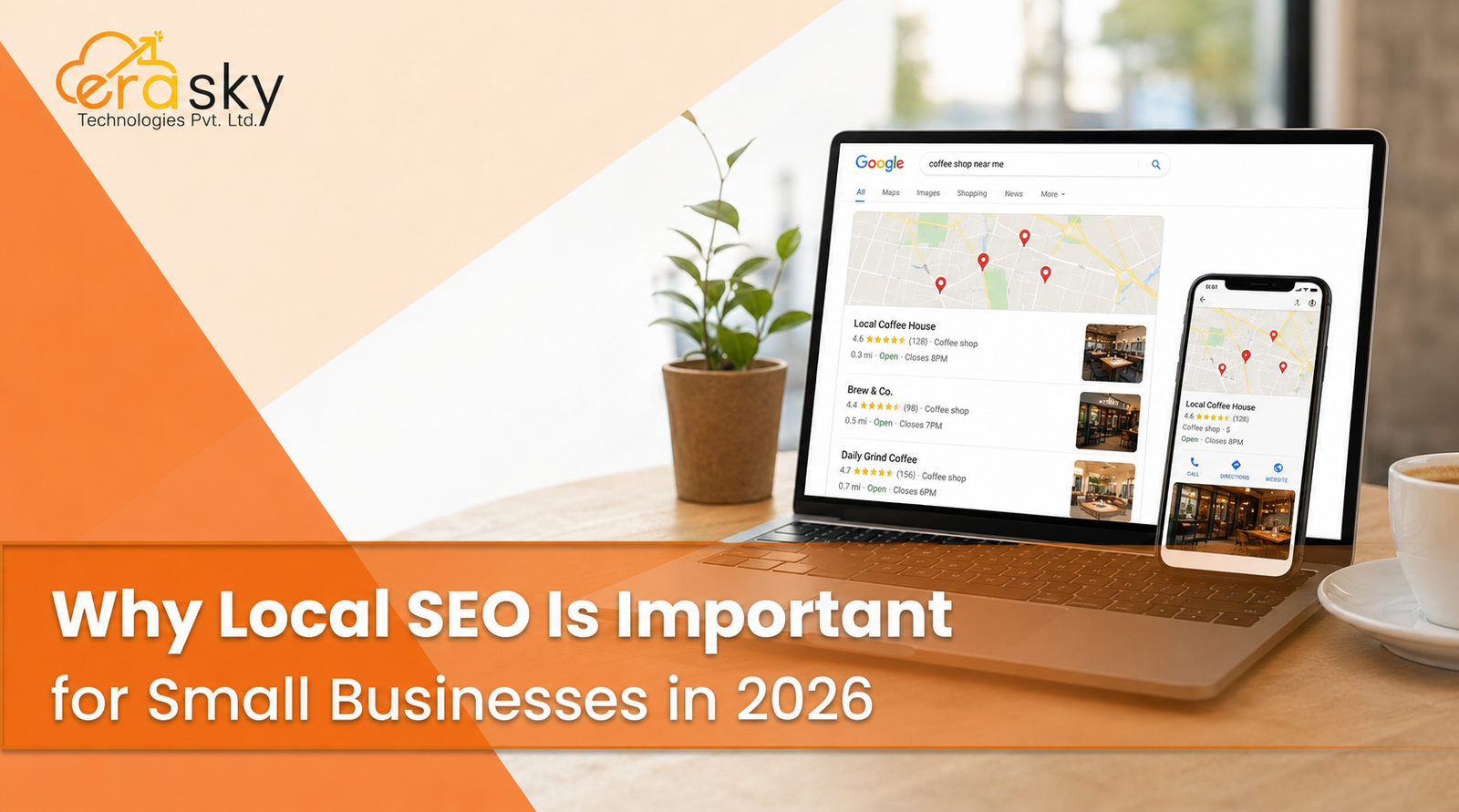
Local Search Is No Longer Just About Rankings
A small dental clinic may offer exceptional treatment, experienced doctors, and affordable pricing, yet still struggle to attract new patients. Meanwhile, another clinic across town consistently appears in Google Maps, AI-generated search recommendations, and “best dentist near me” results, receiving most of the calls and bookings.
The difference is no longer just branding or advertising budget.
It is visibility inside modern local search ecosystems.
In 2026, search behavior has fundamentally changed. Google is no longer simply matching keywords to websites. AI systems now evaluate trust, relevance, customer sentiment, engagement signals, and real-world business credibility before deciding which businesses deserve visibility.
This is exactly why why local SEO is important has become one of the biggest conversations among business owners, marketers, and founders.
Modern local SEO for small businesses is now a complete discovery system that affects:
- Google Maps visibility
- AI Overviews
- Voice search recommendations
- Mobile search rankings
- Local Pack positions
- Customer trust
- Calls and bookings
- Revenue growth
For many businesses, local SEO has become more commercially valuable than traditional SEO because it targets users with immediate buying intent.
A user searching “emergency plumber near me” or “best salon nearby open now” is already close to making a decision. Businesses visible at that moment gain a direct competitive advantage.
The Local SEO Landscape in 2026 Has Changed Completely
AI Search Reshaped Local Discovery
Search engines have entered an AI-first era.
Google AI Overviews, conversational AI search experiences, voice assistants, and hyper-personalized local recommendations are now influencing customer decisions before users even visit a website.
Instead of scrolling through ten blue links, users increasingly receive:
- AI-generated recommendations
- Summarized reviews
- Local business comparisons
- Instant map suggestions
- Community-driven insights
This shift changed how businesses compete online.
Previously, larger brands dominated search through massive backlink profiles and domain authority. Today, AI-driven local search increasingly prioritizes:
- proximity,
- trust,
- engagement,
- review quality,
- business activity,
- and customer experience signals.
This creates a massive opportunity for small businesses.
A highly optimized local business with strong reviews and an active digital presence can outperform much larger competitors in local search visibility.
That is one of the biggest benefits of local SEO in 2026.
Traditional SEO Tactics No Longer Work Alone
Older local SEO strategies focused heavily on:
- citation building,
- keyword stuffing,
- thin location pages,
- and directory submissions.
Those tactics alone are no longer enough.
Google now evaluates businesses as complete digital entities.
The algorithm increasingly looks at:
- Google Business Profile activity,
- review sentiment,
- structured data,
- customer interactions,
- mobile usability,
- local authority,
- and brand consistency across platforms.
Businesses relying on outdated methods are slowly disappearing from high-intent local searches.
Why Small Businesses Struggle With Local Visibility
Most Businesses Optimize Only One Piece of the System
One of the biggest mistakes businesses make is assuming local SEO only means ranking a website.
In reality, Google evaluates the entire local ecosystem.
A business may have:
- a beautiful website,
- decent content,
- and good services,
yet still fail because:
- reviews are weak,
- GBP is inactive,
- mobile UX is poor,
- or entity signals are inconsistent.
This fragmented approach weakens visibility.
Google Business Profile Became the Core of Local SEO
In 2026, Google Business Profile is effectively a mini-website and AI data source combined.
Google now pulls information directly from:
- business descriptions,
- reviews,
- Q&A sections,
- photos,
- updates,
- services,
- and engagement activity.
An incomplete or inactive profile reduces trust instantly.
Businesses that actively optimize GBP gain stronger visibility in:
- Local Packs,
- AI summaries,
- Maps results,
- and voice search recommendations.
This is why experienced businesses increasingly work with a professional local SEO company rather than treating local optimization as a side task.
Reviews Are Now Ranking Signals
Reviews influence far more than reputation.
They now directly impact:
- rankings,
- AI inclusion,
- click-through rates,
- customer trust,
- and conversions.
Google’s AI systems increasingly analyze:
- review freshness,
- emotional tone,
- specificity,
- authenticity,
- and expertise indicators.
A business with 300 generic five-star reviews may perform worse than a business with fewer but highly detailed and authentic reviews.
Modern local SEO is now deeply connected to reputation management and customer experience.
The Key Factors Driving Local SEO Performance in 2026
Google Business Profile Optimization
GBP optimization remains one of the strongest local ranking factors.
A fully optimized profile should include:
- accurate categories,
- updated business hours,
- detailed services,
- high-quality images,
- FAQs,
- service areas,
- and regular posts.
Consistent activity signals trust and legitimacy to Google.
Businesses that update their profiles regularly often outperform competitors with stronger websites but weaker engagement signals.
Mobile Experience Matters More Than Ever
Most local searches now happen on smartphones.
Google increasingly measures:
- page speed,
- click-to-call usability,
- mobile navigation,
- bounce behavior,
- and interaction quality.
A slow or poorly optimized mobile website damages both rankings and conversions.
Even small UX improvements can significantly improve local search performance.
Structured Data and Entity SEO
Search engines increasingly rely on structured information to understand businesses.
Schema markup helps AI systems identify:
- business type,
- location,
- services,
- reviews,
- FAQs,
- and operating hours.
Businesses without structured data are becoming less visible in AI-assisted search environments.
Entity-based SEO is replacing old keyword-focused optimization.
Google wants to understand whether a business is:
- trustworthy,
- established,
- active,
- and consistently represented across the internet.
Behavioral Signals Influence Rankings
Modern local SEO also includes behavioral metrics such as:
- clicks,
- calls,
- direction requests,
- engagement,
- and booking interactions.
These signals help Google determine whether users actually trust and interact with a business.
This means rankings are no longer purely technical.
Real customer behavior matters.
The Strategic Framework Behind Effective Local SEO
Foundation Comes First
Strong local SEO begins with infrastructure.
Before advanced tactics, businesses need:
- consistent NAP information,
- mobile optimization,
- technical SEO cleanup,
- schema markup,
- and fully optimized GBP profiles.
Without this foundation, growth becomes unstable.
Reputation Is a Growth Engine
Review acquisition should not be random.
Businesses need structured systems for:
- requesting reviews,
- responding consistently,
- monitoring sentiment,
- and improving customer experience.
In 2026, reputation itself functions as a ranking mechanism.
Businesses with authentic customer engagement gain stronger visibility and higher conversions.
Localized Content Builds Relevance
Localized content helps businesses connect with high-intent search queries.
Effective local content includes:
- city-specific pages,
- service area content,
- local FAQs,
- conversational search optimization,
- and topical authority development.
Voice search growth also makes conversational content increasingly important.
Users now search naturally:
- “Where is the best dentist near me open today?”
- “Which gym nearby has personal training?”
- “Best AC repair service available right now?”
Content must reflect how people actually search.
AI Visibility Optimization Is Becoming Essential
Businesses now optimize not only for Google rankings but also for AI discovery systems.
This includes:
- AI citation readiness,
- entity consistency,
- semantic relevance,
- and machine-readable trust signals.
The businesses appearing inside AI-generated recommendations will dominate local visibility over the next several years.
Local SEO Is Now an Entire Ecosystem
Isolated Fixes No Longer Work
Many businesses attempt fragmented optimization.
Examples include:
- improving rankings without fixing reviews,
- running ads with weak GBP profiles,
- or redesigning websites while ignoring mobile performance.
This creates inconsistent trust signals.
Modern local SEO requires alignment between:
- website experience,
- reviews,
- maps visibility,
- content,
- social proof,
- and technical SEO.
Search engines increasingly connect all these signals together.
Why Integrated Execution Wins
Businesses succeeding in local search usually operate with structured systems rather than isolated tactics.
This is where strategic execution becomes important.
Companies like Era Sky Technologies have gained attention because they approach local SEO as a connected ecosystem rather than a checklist.
Instead of focusing only on rankings, integrated strategies combine:
- technical optimization,
- GBP growth,
- content relevance,
- review management,
- AI visibility,
- and conversion optimization.
That integrated approach aligns more closely with how Google evaluates businesses today.
Local SEO Delivers Stronger Commercial ROI
Local Traffic Converts Better
One reason businesses increasingly invest in local SEO packages is conversion quality.
Local users often search with immediate intent.
Searches like:
- “urgent plumber near me,”
- “best coffee shop nearby,”
- or “24-hour pharmacy”
typically lead to direct action.
Research consistently shows local searches drive:
- calls,
- bookings,
- visits,
- and purchases at significantly higher rates than broad informational traffic.
This makes local SEO one of the highest-converting digital marketing channels available.
Paid Advertising Costs Continue Rising
Advertising costs have become increasingly expensive across:
- Google Ads,
- Meta,
- TikTok,
- and other platforms.
Local SEO creates long-term visibility without relying entirely on ad spend.
Unlike paid campaigns that stop generating leads once budgets pause, local SEO compounds over time.
Strong local visibility produces:
- sustainable traffic,
- lower acquisition costs,
- recurring visibility,
- and defensible market positioning.
For many service businesses, this creates a major competitive advantage.
Emerging Local SEO Trends Defining 2026
AI Overviews Are Reducing Organic Clicks
AI-generated answers increasingly provide information directly inside search results.
This means users may:
- call businesses directly,
- request directions,
- or book appointments
without ever visiting a website.
Visibility itself is becoming more valuable than raw traffic numbers.
Social Platforms Became Local Discovery Engines
Consumers increasingly discover local businesses through:
- Instagram,
- TikTok,
- YouTube,
- Reddit,
- and AI assistants.
Younger audiences especially rely on short-form content and community recommendations before making decisions.
Local SEO now overlaps heavily with:
- social discovery,
- content marketing,
- and reputation ecosystems.
Visual Proof Is Becoming a Trust Signal
Authentic images and videos increasingly influence:
- engagement,
- conversions,
- and AI trust evaluation.
Businesses showing real customer experiences often outperform competitors using generic stock imagery.
Visual credibility matters.
Zero-Click Local Search Will Continue Growing
Users increasingly:
- call directly from Maps,
- book through GBP,
- navigate instantly,
- or trust AI-generated summaries.
Businesses must optimize for visibility across the entire search experience, not only website clicks.
Lesser-Known Local SEO Insights Most Businesses Ignore
Review Sentiment Matters More Than Star Ratings
Google increasingly analyzes context and emotional quality inside reviews.
Detailed reviews mentioning specific services and experiences carry more ranking value than generic praise.
AI Systems Can Recommend Businesses Users Never Searched For
AI-generated local suggestions are becoming proactive.
Businesses optimized for trust and relevance may appear in searches even without exact keyword matches.
Behavioral Signals Influence Visibility
Direction requests, click-to-call actions, and engagement metrics increasingly affect rankings.
Google wants evidence that users genuinely interact with businesses.
Entity Consistency Builds AI Trust Faster
Consistent business information across:
- websites,
- social profiles,
- directories,
- and maps
helps AI systems validate legitimacy more efficiently.
Active Businesses Outperform Passive Competitors
Regular updates, new reviews, recent photos, and customer engagement all contribute to stronger local performance.
Inactive profiles slowly lose visibility.
Why Local SEO Became a Business Survival System
Local SEO in 2026 is no longer optional.
It has become:
- a trust framework,
- a visibility engine,
- a lead-generation system,
- and an AI discovery mechanism.
Businesses that fail to adapt face:
- declining discoverability,
- weaker customer trust,
- reduced map visibility,
- increasing ad dependency,
- and lost revenue opportunities.
The businesses winning local search today are not always the largest brands.
They are the businesses that:
- stay active,
- maintain strong reputations,
- optimize for AI systems,
- improve customer experience,
- and build consistent trust signals across platforms.
That shift created a major opportunity for small businesses willing to approach local SEO strategically.
Conclusion
The conversation around why local SEO is important has changed dramatically over the last few years.
Local SEO is no longer just about rankings or citations.
It now influences:
- AI visibility,
- consumer trust,
- customer acquisition,
- conversions,
- and long-term business growth.
As search engines move toward AI-driven recommendations and zero-click search experiences, businesses with weak local ecosystems will struggle to remain visible.
Meanwhile, businesses with:
- optimized Google Business Profiles,
- authentic reviews,
- strong mobile experiences,
- structured data,
- localized content,
- and integrated trust signals