Recent Posts
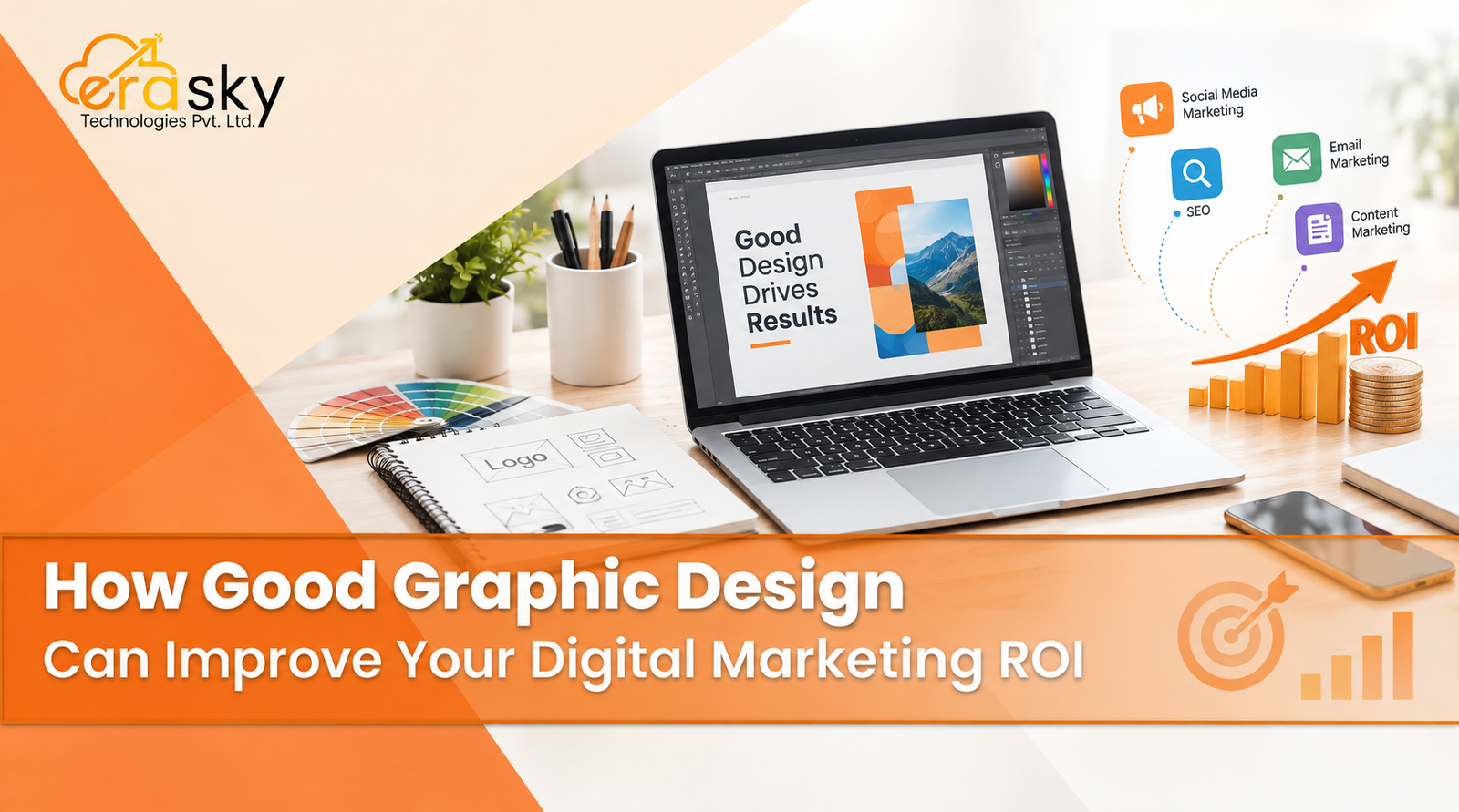
A marketing campaign can have the right audience, offer, budget, and targeting and still underperform when the creative makes the message hard to notice or understand. A cluttered ad can lose the click. A confusing landing page can lose the lead. Inconsistent visuals can weaken trust before a customer even reads the copy.
That is why graphic design in digital marketing should be treated as a performance tool, not just a finishing layer.
Good design helps people notice important information, understand an offer, move through a page with less friction, and recognize a brand across channels. Those effects can influence engagement, click-through rate (CTR), conversion rate, lead generation, and the efficiency of marketing spend.
The key point is simple: design does not create ROI by itself. It can make the rest of a digital marketing system more effective when visual decisions support the audience, message, channel, and conversion goal.
How does graphic design improve digital marketing ROI?
Graphic design can improve digital marketing ROI by making marketing communication clearer, more credible, more recognizable, and easier to act on.
Better visual communication → stronger attention and comprehension → more meaningful engagement → more actions → more conversions → better use of marketing spend.
This is not a guarantee of higher returns. Results also depend on the offer, audience, copy, targeting, website experience, budget, competition, and market conditions. Poor design, however, can introduce avoidable friction at several points in the customer journey.
Usability and credibility guidance consistently emphasizes clear visual hierarchy, readable presentation, consistent design patterns, and trustworthy information as important parts of effective digital experiences.
Why is graphic design important in digital marketing?
Digital marketing is experienced through social posts, paid ads, emails, websites, landing pages, product pages, and other digital assets. In each setting, design has a job.
It may need to stop the scroll, make an offer understandable, guide attention toward a call to action (CTA), explain a complex idea, or help a customer feel confident enough to continue.
Design creates visual hierarchy
Visual hierarchy determines what people notice first, second, and third. Size, spacing, typography, contrast, alignment, imagery, and placement can influence that sequence.
A strong landing page lets visitors quickly answer:
What is this? Why should I care? What should I do next?
A cluttered layout makes people work harder to find those answers. That friction can make important information easier to miss.
Design supports credibility
Visual presentation contributes to how people perceive a website's credibility. Stanford's Web Credibility Guidelines, for example, highlight professional appearance and clear information presentation as factors that can influence trust.
A polished design is not proof that a business is trustworthy. But poor design can make an otherwise credible business look less dependable.
Consistent typography, colors, imagery, spacing, and brand elements also make a business easier to recognize across marketing touchpoints.
Design reduces communication friction
Good marketing design helps an audience process information.
Infographics can simplify data. Product graphics can highlight features. Strong page structure can separate the offer, benefits, proof, and next step. The objective is not more decoration. It is less confusion.
How does good graphic design increase conversions?
Conversions usually happen after several small decisions. A person notices an ad, clicks, reviews a page, evaluates the offer, decides whether the business feels credible, and then takes an action.
Design can support several of those steps.
Landing page design can improve the path to action
A conversion-focused landing page should make the next action obvious without making the experience feel cluttered or aggressive.
Useful design decisions include:
- clear information hierarchy
- readable forms
- enough visual space around key content
- a prominent primary CTA
- consistent visuals between ad and landing page
- mobile-friendly layouts
Imagine a paid ad with a specific promise that leads to a landing page with unrelated visuals and a difficult-to-find offer. The visitor has to re-orient themselves.
Better ad creatives can support CTR
In Google Ads, Meta Ads, LinkedIn campaigns, or display advertising, the creative is part of the message.
Typography, contrast, composition, imagery, and message hierarchy can influence whether the main idea is noticed quickly. A stronger CTR can create more opportunities for qualified traffic, but CTR alone is not ROI.
An ad that earns many clicks from the wrong audience can increase spend without increasing revenue. Creative performance should therefore be considered alongside conversion rate, cost per lead (CPL), customer acquisition cost (CAC), and return on ad spend (ROAS), where those metrics fit the campaign.
Can graphic design improve lead generation?
Yes, but the goal is not simply to make a page prettier.
Good design can support lead generation when it helps the right visitor understand the offer and complete the intended action. This is especially important for service businesses asking people to request a consultation, submit a form, book a call, or download a resource.
Design can clarify the value proposition, organize qualification questions, reduce visual clutter, and guide visitors toward the most relevant next step.
How does visual content affect customer engagement?
Visual content can make digital information easier to consume, but engagement should be connected to a business goal.
On social media, strong graphic design can improve readability and recognition. In email, structured visuals can help readers scan the message and find the next step. In content marketing, diagrams and infographics can make complex subjects easier to understand.
The practical rule is to design for the platform and audience rather than creating one asset and resizing it everywhere.
An Instagram graphic, LinkedIn post, email banner, and display ad can share brand elements while using different layouts and information density.
How does branding influence digital marketing performance?
Brand identity can affect marketing efficiency because customers encounter a business more than once.
A person may see an Instagram post, later notice a paid ad, visit the website, and then receive an email. If every touchpoint looks unrelated, the experience can feel fragmented. If the visual identity remains consistent, the customer can more easily connect those interactions to one brand.
Graphic design therefore supports more than individual campaigns. It helps create continuity across the customer journey.
What types of graphic design are used in digital marketing?
Graphic design for marketing can include:
Social media graphics: posts, carousels, stories, and campaign visuals.
Ad creative design: Google Ads, Meta Ads, LinkedIn, display, and promotional creatives.
Website and landing page visuals: banners, page graphics, UI elements, and conversion-focused layouts.
Email marketing graphics: headers, promotional visuals, product graphics, and branded templates.
Infographics and visual content: visual explanations of processes, research, products, or complex information.
Lead-generation assets: ebooks, whitepapers, case study graphics, presentations, and downloadable resources.
Branding assets: logos, visual identity elements, templates, brochures, catalogues, and other business collateral.
The right asset depends on the customer journey and marketing objective. More graphics are not automatically better.
How can businesses measure the ROI of graphic design?
The biggest mistake is trying to measure "the ROI of design" as if design operates separately from the campaign.
A better approach is to connect a design change to the business outcome it is intended to influence.
For paid advertising, compare creative variations using CTR, conversion rate, CPL, CAC, or ROAS.
For landing pages, monitor conversion rate, form completion, qualified leads, and revenue when reliable attribution is available.
For social media, look beyond likes and examine actions such as website visits, leads, or assisted conversions when those can be measured.
A/B testing can help compare creative variations. Keep the test focused and interpret results carefully so normal performance fluctuations are not mistaken for a genuine improvement.
The rule is straightforward: measure the outcome the design is supposed to influence.
What makes marketing design effective?
Effective marketing design is not simply attractive. It is purposeful.
It usually has a defined audience, a clear objective, focused messaging, strong hierarchy, readable typography, appropriate imagery, consistent branding, and an obvious next step.
Ineffective design often creates the opposite problems: competing elements, weak contrast, inconsistent branding, unclear messaging, decorative graphics with no purpose, or CTAs that disappear into the layout.
Mobile experience matters as well. Responsive design and accessible presentation help ensure that important content remains usable across devices. The Web Content Accessibility Guidelines (WCAG) cover areas such as text presentation, contrast, structure, and adaptable content.
When should a business invest in professional graphic design services?
Professional graphic design services can be useful when a business faces low-performing ad creatives, inconsistent branding, outdated website visuals, cluttered landing pages, slow campaign production, or an overloaded marketing team.
They can become even more valuable as marketing expands across paid advertising, content, email, e-commerce, and multiple social channels. More touchpoints mean more opportunities for inconsistent design.
The right model may be in-house support, project-based outsourcing, or an ongoing graphic design partner. The choice depends on creative volume, complexity, internal skills, deadlines, and budget.
Where EraSky Technologies fits
Era Sky Technologies combines graphic design with website development, SEO, social media marketing, paid advertising, and e-commerce marketing.
That broader capability can be useful when visual work needs to connect with the rest of the customer journey. For example, ad creatives may need to align with a landing page, website visuals may need to support UX and technical performance, and branded content may need to remain consistent across channels.
EraSky's stated approach follows a structured cycle of understanding, planning, execution, measurement, optimization, and scaling. Its website-development capabilities include UI design, UX planning, responsive layouts, technical SEO, performance optimization, and scalable architecture.
No agency can honestly promise guaranteed rankings, conversions, or advertising returns. Design is one component of a larger system. The value comes from connecting creative decisions to a clear business objective and measuring what happens next.
The real ROI of good design
Good graphic design should not be judged only by whether a campaign looks polished.
Its value is better understood through the behavior it is designed to support. Clearer visuals can help people understand an offer faster. Stronger ad creatives can help a message stand out.
Better landing page structure can make the next action easier to find. Consistent branding can create a more coherent customer journey.
The useful question is not:
"Does this design look good?"
It is:
"What marketing job is this design supposed to do, and how will we know whether it worked?"
That question connects creativity to performance.
And that is where graphic design can become more than a visual expense. Used strategically, it can help make existing digital marketing efforts clearer, more consistent, and more effective.
Frequently Asked Questions
How does graphic design improve digital marketing ROI?
It can improve ROI by supporting attention, comprehension, engagement, clicks, and conversions. The actual return depends on the wider marketing system, including targeting, offer, copy, website experience, budget, and market conditions.
Why is graphic design important in digital marketing?
Graphic design helps businesses communicate quickly and consistently across websites, ads, social media, email, and content. It supports readability, brand recognition, visual hierarchy, and user experience.
Can graphic design improve lead generation?
Yes. Clear visual hierarchy, strong offers, easier-to-scan forms, and well-designed landing pages can reduce friction and help visitors understand the next step.
How can businesses measure the ROI of graphic design?
Measure the outcome the design is intended to influence. Depending on the channel, that may include CTR, conversion rate, CPL, CAC, qualified leads, revenue, or ROAS. A/B testing can help compare alternatives.
Does professional graphic design increase website conversions?
It can support conversions through clearer hierarchy, stronger usability, credibility, mobile presentation, and more visible CTAs. It cannot guarantee higher conversions because other factors affect the result.
When should a business hire a graphic design agency?
Consider professional support when campaigns require frequent creative production, branding is inconsistent, landing pages are difficult to use, design quality is limiting marketing execution, or an internal team lacks the capacity or specialist skills.