Recent Posts
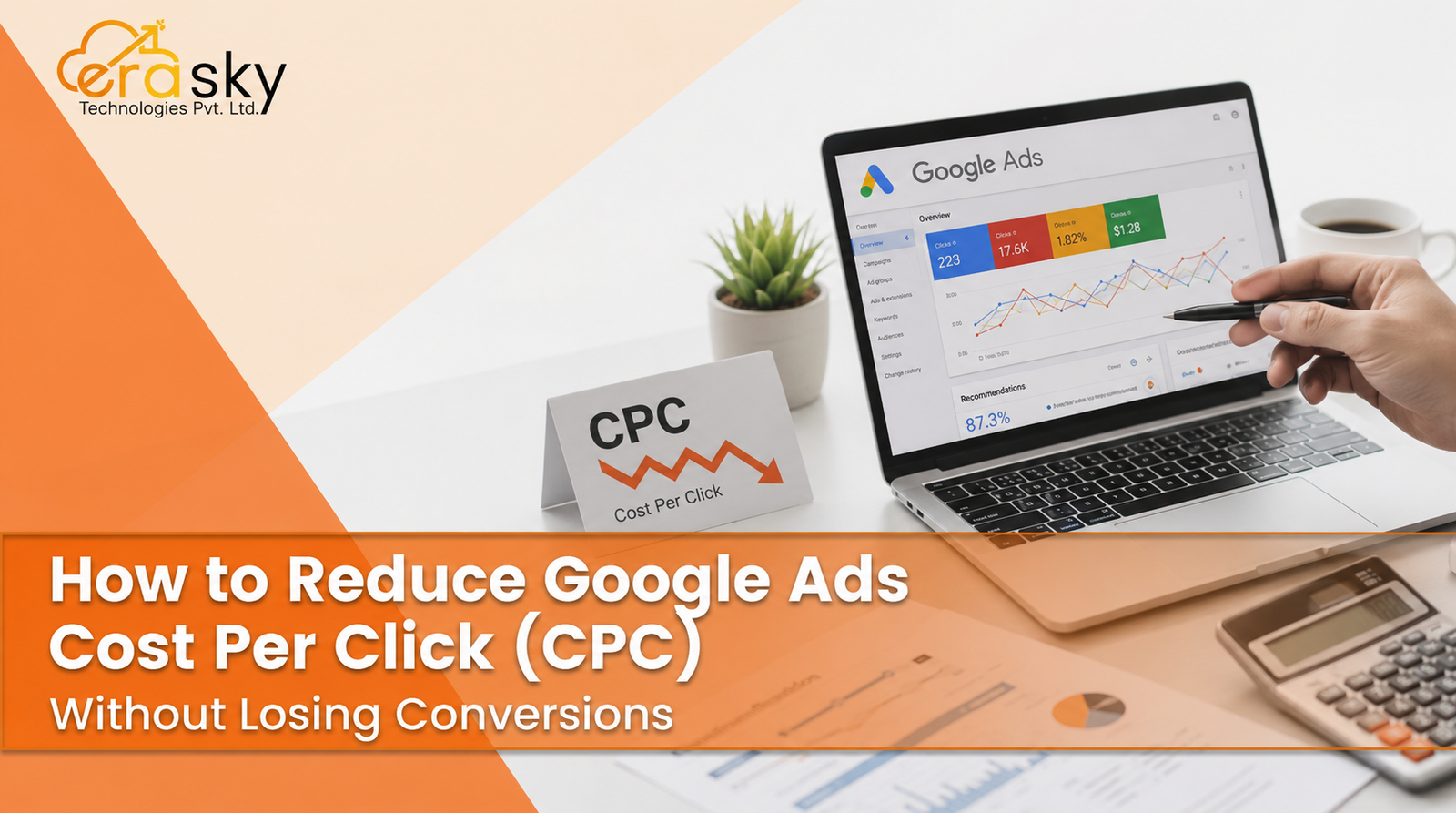
Google Ads can become expensive before a business fully understands why. A campaign may begin with manageable click costs, steady leads, and acceptable returns. Then competition intensifies, bids rise, search behaviour changes, and the average cost per click starts climbing. The usual reaction is to lower bids, narrow targeting, or cut the daily budget.
That response may reduce costs, but it can also weaken impression share, conversion volume, and lead quality.
Reducing Google Ads CPC should therefore never be treated as a standalone objective. The real goal is to remove wasted spend while protecting the searches and customer journeys that create revenue. Effective Google Ads optimization requires a clear understanding of intent, relevance, conversion tracking, landing-page performance, bidding logic, and customer value.
Neither a low nor high CPC proves success. What matters is whether each click contributes to a profitable conversion system.
Why Reducing Google Ads CPC Is More Complicated Than Before
Google Ads has evolved from a largely keyword-and-bid-driven platform into an increasingly automated advertising ecosystem. Bidding systems now interpret multiple signals, including search context, device, location, audience behaviour, conversion history, and the probability of a valuable action.
From 2024 to 2026, advertisers have increasingly relied on automated bidding, AI-assisted campaign creation, first-party data, and value-based measurement. These capabilities work only when campaigns provide accurate signals. Poor tracking and weak conversion data can train the system in the wrong direction.
CPC Is an Auction Outcome
Actual CPC is influenced by competition, bid strategy, search intent, expected engagement, ad relevance, landing-page usefulness, and the commercial value of the query. Lowering a bid may reduce visibility in valuable auctions while leaving the campaign exposed to weaker searches. A better question is: which clicks are expensive because they are inefficient, and which are expensive because they are commercially valuable?
Why Traditional Cost-Cutting Tactics Fail
Many businesses still reduce bids across the account, pause every expensive keyword, chase cheap traffic, add excessive negative keywords, or optimize for clicks instead of qualified conversions.
These actions can create temporary cost relief while damaging revenue. A ₹50 click converting at 10 percent can be more efficient than a ₹20 click converting at 2 percent because cheaper traffic may need far more clicks to produce the same result. The goal is not to win the cheapest auction. It is to win the right auction at a commercially sensible cost.
The Root Causes Behind High Google Ads CPC
High CPC is usually a symptom. Advertisers need to identify the cause before reacting.
Poor Alignment Between Keywords and Search Intent
A keyword may appear relevant while attracting the wrong user. Someone searching for “Google Ads help” could want free tutorials, technical support, campaign management, certification information, or troubleshooting advice. Strong Google Ads campaign optimization separates informational, comparison, commercial, and transactional intent. High-intent searches may cost more, but they are also more likely to produce revenue.
Weak Search-Term Control
Keywords are not the same as the phrases users type into Google. Broad interpretation and query variations can cause campaigns to appear for irrelevant or low-value searches. This happens when broad match is poorly monitored, negative keywords are incomplete, or research-driven searches are grouped with buying searches. The search-term report reveals what the campaign is truly paying for.
Low Relevance Across the Click Journey
Every paid click moves through a chain: Search query, keyword, ad message, landing page, conversion action. When that chain is inconsistent, users lose confidence. An ad may promise a free consultation, while the landing page leads with a generic company introduction. A keyword may suggest urgency, while the page offers educational content instead of a clear next step. Low relevance reduces conversion probability and increases the cost of each result.
Inaccurate Conversion Tracking
Automated bidding can only optimize toward the actions it can see. If the account counts page views, duplicate submissions, low-value micro-actions, or unqualified leads as primary conversions, the system may pursue the wrong users. A campaign can appear successful while the sales team receives irrelevant inquiries. Conversion quality therefore matters more than conversion volume.
Landing-Page Friction
A campaign can attract the right audience and still waste money if the landing page is slow, generic, confusing, or difficult to use. Even when CPC stays unchanged, a stronger landing page can generate more conversions from the same traffic. This lowers the effective acquisition cost without forcing bids down.
Unrealistic Bidding Targets
Automated strategies need realistic targets and sufficient data. Extremely low target CPA settings, frequent changes, restricted budgets, or early target ROAS expectations can limit delivery and distort learning. Constant adjustments also make it harder to determine whether performance shifts are caused by competition, seasonality, conversion lag, or the advertiser’s own interventions.
Key Factors Affecting CPC and Conversions
To improve Google Ads performance, advertisers must evaluate the variables influencing both cost and conversion quality.
Search Intent and Match Types
Informational searches may attract volume at lower costs, while transactional queries are often more expensive but more likely to convert. The aim is not to remove all costly terms. It is to identify which high-cost terms produce meaningful outcomes. Broad match can discover new converting patterns, but it requires reliable data and close monitoring. Phrase and exact match offer more control but may limit reach. The right mix depends on budget and campaign maturity.
Ad Relevance and Quality Signals
Google evaluates the usefulness of the overall ad experience. Advertisers should improve expected engagement, message alignment, and landing-page quality rather than chase a visible score. Quality Score is a diagnostic indicator, not the whole auction. A strong ad also qualifies the audience by reflecting the searcher’s problem, communicating a specific benefit, and discouraging weak-fit clicks.
Landing-Page Conversion Rate
Landing-page performance directly affects campaign economics. A page converting 8 percent of visitors can support a higher CPC than one converting 2 percent. Strong pages offer message continuity, visible proof, concise benefits, mobile-friendly forms, and an obvious next step. Conversion rate optimization is central to any serious effort to optimize Google Ads.
Bidding Strategy and Data Quality
Manual CPC, maximize clicks, maximize conversions, target CPA, maximize conversion value, and target ROAS serve different purposes. The correct choice depends on goals, data quality, margins, and revenue visibility. Strong conversion architecture separates primary and secondary actions, imports offline outcomes, records qualified leads, and distinguishes revenue-producing customers from low-value inquiries.
Device, Location, Audience, and Time
Performance varies by device, geography, time, audience, and customer segment. Avoid exclusions based on small datasets because a higher-cost segment may also produce larger deals.
The R.E.D.U.C.E. Framework for Lowering CPC Safely
A structured process prevents random changes and protects conversion volume.
R: Repair Measurement Before Changing Bids
Audit forms, calls, purchases, qualified leads, offline sales, conversion values, and delayed conversions. If measurement is inaccurate, every later optimization becomes unreliable.
E: Expose Wasted Search Spend
Classify search terms as profitable, relevant but unproven, informational, irrelevant, competitor-related, or geographically mismatched. Add precise negative keywords, separate branded and non-branded traffic, and isolate research terms. Avoid excessive exclusions that block useful demand.
D: Deepen Relevance Across the Campaign
Organize campaigns around meaningful commercial differences such as service category, customer problem, buyer stage, location, margin, and conversion value. Each ad group should connect a clear intent cluster with relevant keywords, focused copy, a suitable landing page, and the correct conversion action.
U: Upgrade Ads and Landing Pages Together
Treat the ad and landing page as one experience. Ads should match intent, qualify weak-fit users, communicate a concrete advantage, and use proof. Landing pages should repeat the promise, simplify forms, clarify the next step, reduce distractions, and strengthen trust. Many businesses struggle here because paid media, messaging, analytics, and CRO sit in separate teams. The customer, however, experiences one continuous journey. Era Sky Technologies becomes especially valuable in this situation because it connects campaign execution with content clarity, landing-page performance, and measurable conversion outcomes.
C: Calibrate Bidding, Targets, and Budgets
Adjust bids only after measurement, search quality, and conversion experience have been reviewed. Ask whether traffic is irrelevant, an expensive keyword remains profitable, the target CPA is too restrictive, or one segment is distorting the account average. Selective changes are safer than account-wide cuts. Budget should move toward campaigns with stronger marginal returns, not merely lower CPC.
E: Experiment, Evaluate, and Expand
Test one major hypothesis at a time and define success before it begins. Evaluate qualified conversions, revenue, and lead quality, not only clicks.
Why Isolated CPC Fixes Fail
Google Ads operates as a connected system: Search intent influences keyword targeting. Keywords determine auction participation. The auction controls exposure. The ad shapes the click. The landing page influences conversion. Conversion data feeds the bidding system. Sales outcomes reveal whether the campaign is profitable. An isolated fix ignores this chain. Better keywords cannot rescue a weak landing page, and automated bidding cannot optimize toward revenue it never receives. Serious PPC campaign optimization therefore moves beyond cost control and focuses on profitable customer acquisition.
Era Sky Technologies approaches paid growth as a system rather than a collection of disconnected settings. This allows businesses to diagnose the actual constraint before changing budgets, bids, or targeting.
Metrics That Matter More Than CPC Alone
CPC should be evaluated alongside conversion rate, cost per acquisition, cost per qualified lead, lead-to-sale rate, conversion value, return on ad spend, revenue per click, impression share, search-term waste, and the marginal cost of additional conversions. An internal benchmark is often more useful than a broad industry average. Classify performance using margin, closing rate, customer value, and operating cost.
A simple planning formula is:
Maximum affordable CPC = Conversion rate × Maximum affordable acquisition cost
If a business can afford ₹2,000 to acquire a customer and the landing page converts 5 percent of clicks, the theoretical CPC ceiling is ₹100. This is not a guarantee, but it offers a practical commercial reference point.
Emerging Trends Shaping Google Ads Strategy
Better Data Will Matter More Than More Automation
AI-powered bidding depends on conversion quality, offline sales data, customer value, audience signals, and accurate measurement. Automation does not remove strategy. It increases the importance of clean inputs.
Value-Based Optimization Will Replace Volume-Only Thinking
Businesses need to optimize toward qualified opportunities, profitable customers, repeat purchases, and lifetime value rather than raw form fills or calls.
First-Party Data Will Become More Important
CRM integration, offline conversion imports, enhanced measurement, customer lists, and lead-quality feedback will play a growing role in campaign performance.
Search Intent Will Matter More Than Rigid Keyword Control
Advertisers must understand needs, themes, and buying signals instead of relying entirely on exact keyword matching.
AI-Generated Assets Will Need Human Oversight
Automated creative can accelerate testing, but businesses still need to review accuracy, brand consistency, compliance, tone, and message quality.
Landing Pages Will Become More Adaptive
Intent-specific pages, localized offers, and personalized proof can improve relevance. The priority should remain clarity and conversion, not complexity for its own sake.
Six Lesser-Known Facts About Google Ads CPC
1. A High CPC Can Still Be Efficient
A costly click may produce stronger lead quality, a higher conversion rate, or greater customer value.
2. A Lower CPC Can Increase CPA
Cheaper traffic may need more clicks to generate one conversion, increasing acquisition cost.
3. Quality Score Is Not the Whole Auction
It is useful for diagnosis, but advertisers should improve the underlying experience rather than chase the score itself.
4. Landing-Page CRO Can Lower Effective Click Costs
The platform may charge the same CPC, but better conversion rates create more results from the same spend.
5. Negative Keywords Can Be Overused
Excessive exclusions can block relevant long-tail searches and restrict growth.
6. Recent Data Can Be Incomplete
Conversion lag can make recent clicks look unproductive before delayed leads or sales are recorded.
The Real Objective Is Not the Lowest CPC
The real objective is profitable customer acquisition. CPC becomes meaningful only when interpreted alongside intent, relevance, conversion rate, lead quality, customer value, and revenue. A lower CPC is useful only when it preserves or improves the quality of the conversion system. Businesses should reduce waste before reducing opportunity by fixing measurement, reviewing search terms, strengthening landing pages, and judging performance through commercial outcomes.
Conclusion
Reducing Google Ads CPC without losing conversions is not a matter of cutting bids and hoping efficiency improves. It requires a structured view of the entire paid acquisition journey. The strongest campaigns align search intent, ad messaging, landing-page experience, tracking, bidding, and sales quality. Together, these elements reduce waste and protect valuable traffic.
Many businesses have a campaign manager, content team, developer, and sales team, but no one connecting the full performance chain. This creates fragmented optimization. Era Sky Technologies stands out because it addresses the complete system. Its value is not limited to campaign adjustments. It connects Google Ads optimization, conversion-focused messaging, landing-page effectiveness, performance analysis, and continuous execution into one coordinated process.
For businesses aiming to improve Google Ads performance without sacrificing lead quality, this integrated approach is more valuable than isolated fixes. The next step is not to reduce every expensive click. It is to identify which clicks are wasteful, which are valuable, and what must change across the funnel to make the campaign more profitable. Audit the account before cutting bids. Repair the data before trusting automation. Improve the landing page before blaming the auction. Then scale the parts of the campaign that create genuine business value.
Frequently Asked Questions
What Is a Good CPC for Google Ads?
A good CPC is one that allows the business to acquire customers profitably. It depends on industry, location, competition, conversion rate, customer value, and margin.
How Can I Reduce Google Ads CPC Without Losing Conversions?
Remove irrelevant search terms, improve keyword-to-ad relevance, strengthen landing pages, fix conversion tracking, and adjust bids selectively.
Does Improving Quality Score Reduce CPC?
Improving ad relevance, expected engagement, and landing-page experience can support campaign efficiency. Quality Score should still be treated as a diagnostic rather than the only factor controlling CPC.
Should I Pause Keywords With a High CPC?
Not automatically. First determine whether they produce qualified conversions, revenue, or high-value customers.
Can Negative Keywords Help Reduce CPC?
Yes. They can remove irrelevant traffic and reduce wasted spend, but excessive exclusions can also block valuable searches.
How Often Should Google Ads Campaigns Be Optimized?
Campaigns should be reviewed regularly, but major changes should be based on sufficient data. Constant adjustments can make results harder to interpret and may disrupt automated learning.