Recent Posts
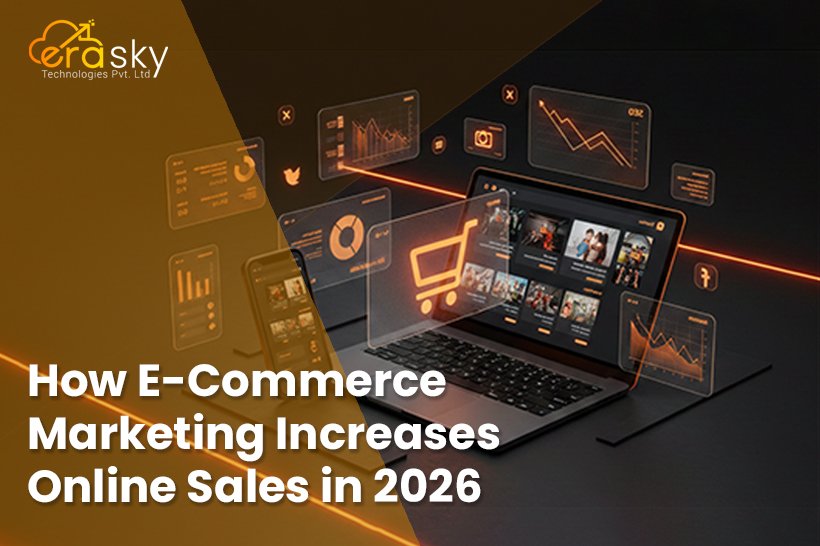
E-commerce in 2026 looks nothing like it did even a few years ago. Online shoppers are no longer moving through simple funnels; they’re interacting with AI search results, creator-led storefronts, social commerce feeds, and automated buying agents. In this environment, growth doesn’t come from isolated tactics. It comes from a cohesive, future-ready e-commerce marketing strategy.
Brands that succeed today treat online store marketing as a connected ecosystem, one that blends personalization, automation, first-party data, and omnichannel experiences to drive measurable revenue growth.
This article breaks down how modern e-commerce marketing increases online sales in 2026, the strategies that matter most, and real-world examples of how brands are winning in practice.
What an E-Commerce Marketing Strategy Means in 2026
In 2026, an e-commerce marketing strategy isn’t about pushing traffic into a funnel and hoping for conversions. It’s about orchestrating the entire customer journey, from discovery to repeat purchase.
A modern strategy focuses on:
- Predictive commerce instead of reactive campaigns
- Customer lifetime value over one-time sales
- Personalization at scale, powered by AI
Example: Nike’s direct-to-consumer ecosystem connects app behavior, exclusive product drops, email personalization, and loyalty rewards. Each interaction builds on the last, creating a smooth experience that naturally encourages repeat purchases.
The guiding question has shifted from “How do we get more clicks?” to “How do we guide the right customer to the right product at the right moment?”
Why E-Commerce Marketing Drives Online Sales Growth in 2026
Consumer expectations have risen sharply. Shoppers want speed, relevance, and convenience—without compromising privacy. Rising ad costs and the decline of third-party cookies make acquisition-only strategies hard to scale.
Modern e-commerce marketing emphasizes:
- AI-driven personalization to improve conversion rates
- First-party and zero-party data instead of cookie-based tracking
- Retention and loyalty as primary growth levers
Example: A Shopify wellness brand replaced cookie-based retargeting with a product quiz. Customers shared preferences voluntarily, which reshaped email campaigns and personalization. Conversion rates improved—not because of more traffic, but because of relevance.
When Is the Right Time to Upgrade Your E-Commerce Marketing Strategy?
Many online stores wait too long to evaluate their marketing strategy. Signs you need an upgrade include:
- Steady traffic but plateauing conversions
- Rising ad costs
- Declining repeat purchases
The right time is when your store needs smarter systems, not louder tactics. Automation, AI-driven personalization, and connected channels can increase sales. Partnering with experts ensures upgrades are strategic, not just tactical.
Key E-Commerce Marketing Channels That Increase Online Sales
1. SEO for Online Stores: AI Search, Social Search, and Voice Commerce
SEO in 2026 extends far beyond traditional Google rankings. Shoppers discover products via:
- AI-generated search summaries
- Instagram and YouTube search
- Voice assistants using conversational queries
Example: An electronics retailer rewrote product pages to answer real customer questions about comparisons, compatibility, and setup. Structured FAQs and comparison tables earned visibility in AI-generated results, bringing higher-intent visitors.
2. Paid Advertising Strategies for E-Commerce in 2026
Paid ads are now automated and predictive.
Key elements:
- Predictive ROAS modeling
- AI-generated ad creatives
- Dynamic budget allocation based on demand signals
Example: An apparel brand used predictive analytics for seasonal demand spikes. Sales increased steadily without increasing the overall budget.
3. Social Commerce and Influencer Marketing
Social platforms are now full sales ecosystems.
Social commerce succeeds because it:
- Feels native and authentic
- Builds trust through creator-led content
- Enables frictionless, in-app checkout
Example: A skincare brand focused on Instagram creator demonstrations rather than polished ads. Short, authentic videos showing real results built trust, and social commerce became a major revenue driver.
4. Email, SMS, and Lifecycle Marketing
Owned channels remain the backbone of sustainable growth.
Lifecycle marketing includes:
- Abandoned cart and browse recovery
- Post-purchase education and upsells
- Predictive replenishment reminders
Example: An online furniture store used personalized reminders and recommendations, increasing repeat purchases without additional messaging.
How Personalization Increases E-Commerce Conversion Rates
Personalization in 2026 goes beyond product recommendations. Brands now personalize:
- Content
- Offers and pricing
- On-site experiences in real time
A mid-sized Shopify store implemented dynamic recommendations across category and product pages. Returning visitors saw familiar products first, reducing friction and steadily improving conversion rates.
Good personalization doesn’t call attention to itself; in fact, it simply makes buying easier.
Conversion Rate Optimization (CRO) Strategies for Online Stores
Traffic alone doesn’t drive growth. Conversion rate optimization focuses on removing hesitation.
High-performing stores prioritize:
- Mobile-first design
- One-click checkout and digital wallets
- Clear reviews, trust signals, and guarantees
A SaaS-enabled e-commerce brand reduced cart abandonment by simplifying checkout to two steps and adding flexible payment options. There was no need for traffic changes—only clarification.
How Customer Experience Impacts Online Sales in 2026
Customer experience is no longer a bonus; it’s a core driver of sales. From mobile-first design to frictionless checkout and personalized recommendations, every touchpoint matters.
Even small improvements can make a difference: a streamlined checkout, quick-loading pages, or tailored product suggestions can increase conversions significantly. Brands that focus on experience retain more customers, increase average order value, and earn repeat purchases without additional ad spend.
Headless and Omnichannel Commerce Strategies for E-Commerce Growth
Modern commerce requires flexibility across platforms and touchpoints.
Benefits include:
- Faster site performance
- Easier integration with new tools
- Unified customer data across channels
A fashion retailer connected in-store purchases with online recommendations using a customer data platform. Customers felt recognized across channels, leading to increased repeat sales.
How to Measure E-Commerce Marketing Success in 2026
In 2026, brands focus on metrics tied to real growth:
- Customer lifetime value (CLV)
- Retention and repeat purchase rates
- Incrementality and attribution testing
One e-commerce team discovered that some “high-performing” channels weren’t driving new demand at all. After incrementality testing, budgets shifted toward channels that actually expanded their customer base.
Common Online Store Marketing Mistakes in 2026
Even strong brands fall into familiar traps:
- Over-reliance on paid ads
- Ignoring retention and loyalty
- Underinvesting in first-party data
A brand with impressive traffic saw margins shrink as ad costs rose. Profitability only stabilized after investing in email, loyalty, and personalization systems.
Future Trends Defining E-Commerce Marketing Beyond 2026
Looking ahead, several trends continue to shape online sales:
- AI shopping agents handling repeat purchases
- Conversational and voice-led commerce
- Privacy-first personalization
- Community-driven brand ecosystems
Early adopters aren’t chasing trends loudly, but they’re testing quietly and integrating what works.
What Successful Online Stores Do Differently in 2026
High-growth e-commerce brands share a few key traits:
- Connected systems: Data, content, automation, and personalization work together seamlessly.
- Customer-first approach: Experience, convenience, and trust guide every interaction.
- Continuous optimization: KPIs, retention strategies, and first-party data are constantly refined.
Instead of chasing the newest trends, these stores focus on predictable, sustainable growth, a strategy that many experienced e-commerce consultants and growth teams help implement for modern online brands.
Conclusion: Turning Strategy Into Sustainable Growth in 2026
By 2026, the brands winning in e-commerce aren’t chasing every new platform or increasing ad spend. They’re building systems like marketing strategies aligned with how people actually discover, decide, and buy. AI-driven personalization, first-party data, and lifecycle automation are no longer advanced tactics; they’re the foundation.
Many online stores reach a point where traffic is steady, but growth slows. This is where strategy starts to matter more than effort.
Brands that break through often do so by connecting what they already have, such as data, automation, content, and conversion optimization, into one cohesive system. In several cases, teams have partnered with Erasky Technologies to modernize what’s working and align online store marketing with long-term revenue goals.
If your store needs smarter systems, not louder tactics, this is a good moment to rethink your e-commerce approach. Exploring how experienced partners like Erasky Technologies work can help turn scattered efforts into a focused growth engine, so you can grow your online sales by building for the long term, not just the next campaign.
FAQ: Frequently Asked Questions About E-Commerce Marketing in 2026
Q1: How does e-commerce marketing increase online sales?
A: By using a cohesive strategy that combines personalization, automation, first-party data, and omnichannel experiences. This ensures customers see the right product at the right time, increasing conversions and repeat purchases.
Q2: When is the right time to upgrade my e-commerce marketing strategy?
A: If your traffic is steady but conversions are plateauing, ad costs are rising, or repeat purchases are low, it’s time to rethink your strategy. Upgrading involves smarter systems, connected channels, and optimized customer journeys.
Q3: Which marketing channels are most effective for online stores in 2026?
A: Key channels include AI-driven SEO, paid advertising, social commerce (Instagram, TikTok), email/SMS lifecycle automation, and personalized on-site experiences. Integrating these channels boosts conversions and retention.
Q4: How does customer experience impact online sales?
A: Every touchpoint matters—from mobile-first design to frictionless checkout and tailored product recommendations. Brands that optimize UX see higher conversions, increased loyalty, and stronger average order values.
Q5: What do successful online stores do differently?
A: They focus on connected systems, data-driven personalization, continuous optimization, and prioritizing customer experience over chasing trends. This ensures predictable, sustainable growth.